

Magazine
NEWS & DESIGN STORIES
Interior Design Between Trend and Timelessness. What Truly Lasts?

How do you create spaces that feel contemporary today, yet remain relevant tomorrow?
1. What does “timeless interior design” mean to you personally? Is true timelessness even possible, or does our taste inevitably change over time?
To me, timelessness does not mean that a space should look exactly the same for decades. It starts with understanding the purpose of the space and its intended lifespan – and that requires a clear brief and an open dialogue with the client. A space designed as a two-year pop-up bar, for example, can intentionally be more trend-driven and relevant to the moment. However, I would still think long-term about its underlying structure.
At CØLAB, we therefore see the “white box” as a long-lasting foundation wherever possible. The architecture, spatial structure, technical planning and key built-in elements should allow for future uses and changes. This is where timelessness and sustainability meet: creating spaces that can adapt rather than constantly needing to be replaced.
2. How can you tell when a space feels contemporary without being driven by trends?
A trend-driven interior often reveals itself very quickly when it was created. You recognise the colours, materials or shapes and can immediately place them within a particular moment. A contemporary yet timeless space feels different, it feels considered and effortless. For me, it starts with the fundamentals: proportion, light, circulation, sightlines and the relationship between spaces. Furniture, materials and decorative elements come afterwards.
Contemporary design doesn’t have to be loud or immediately recognisable. It can also mean reinterpreting traditional elements, or using a few carefully chosen contemporary details to create a very individual atmosphere.
3. Are there interiors or individual pieces of furniture that have fascinated you for decades and that you feel never really go out of style?
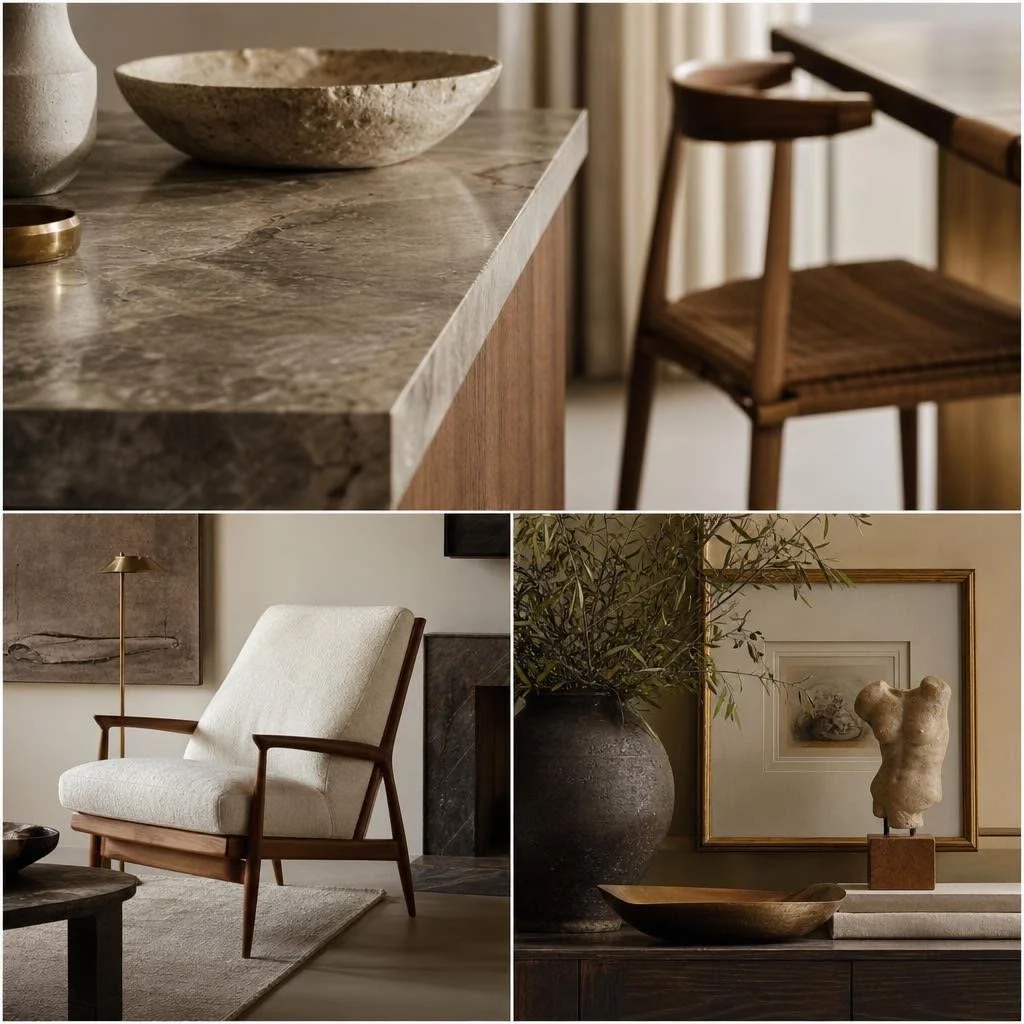
Absolutely. I’m particularly drawn to pieces where construction, material and proportion work together. Furniture that doesn’t rely on a decorative effect, but has a strong inherent design language, tends to remain relevant.
Many iconic pieces work for exactly this reason: they are distinctive without becoming dependent on a particular trend. I also have a strong appreciation for natural materials because they often become more beautiful with age.
Wood, stone, metal and textiles can develop a patina and acquire a sense of history through use. For me, timelessness is therefore not necessarily about minimalism. It is about design with its own logic and integrity.
4. Why do current interior trends have such a strong influence on the way we design our homes?
Trends give us a sense of direction. When designing a home, there are countless decisions to make - from colours and materials to furniture, lighting and finishes. A trend can make those choices feel easier because we repeatedly see a certain aesthetic and begin to recognise it as desirable or familiar. Our visual environment naturally influences our perception.
There is nothing wrong with that. The challenge begins when our own personality disappears behind the references we collect. A home should not feel like a catalogue of current images. It should respond to the people living in it, the architecture of the space and the way they actually want to live.

5. Have Pinterest, Instagram and TikTok changed the life cycle of interior trends? Do trends become outdated faster because we see them so constantly?
I believe so. The speed at which visual trends circulate has changed dramatically. What once appeared in a magazine or an exhibition can now be seen hundreds of times within minutes. As a result, a particular aesthetic can move from being fresh and inspiring to feeling overexposed very quickly.
At the same time, I see social media as an incredible source of inspiration. We have access to architecture, materials and design ideas from all over the world. The important skill today is therefore not simply knowing what is trending, but knowing how to filter it. What genuinely belongs in this particular space? What reflects its architecture, its use and the people who inhabit it?
6. Do you sometimes find that clients strongly want a particular trend, even though it may not suit their home or personality?
That can certainly happen, and I think it is completely understandable. When we repeatedly see something we respond to emotionally, it is natural to want to bring it into our own surroundings. I wouldn’t see my role as simply rejecting that idea. I would first try to understand what exactly appeals to them.
Is it the colour, the material, the atmosphere or perhaps the overall mood of the reference image? Once you understand that, the idea can often be translated into something much more personal.
Good design is not about reproducing a reference image. It is about understanding the quality behind it and interpreting that quality in a way that belongs to the individual space.
7. Which elements of an interior can be trend-conscious | and where should we think more long-term?
I think trends can be embraced in areas that are relatively easy to change. Textiles, cushions, accessories, smaller lighting pieces or decorative elements can shift the character of a room without requiring a complete redesign.
The key is to create a strong and durable foundation while deliberately leaving certain layers of the interior open to change.
I would take a much longer-term view with flooring, kitchens, bathrooms, built-ins, doors or bespoke furniture. These elements establish the identity of a space and are not easily replaced. Lighting design also belongs to that long-term thinking because it fundamentally shapes how an interior is experienced.
8. Are there materials, colours or forms that you feel are particularly safe choices for the long term?
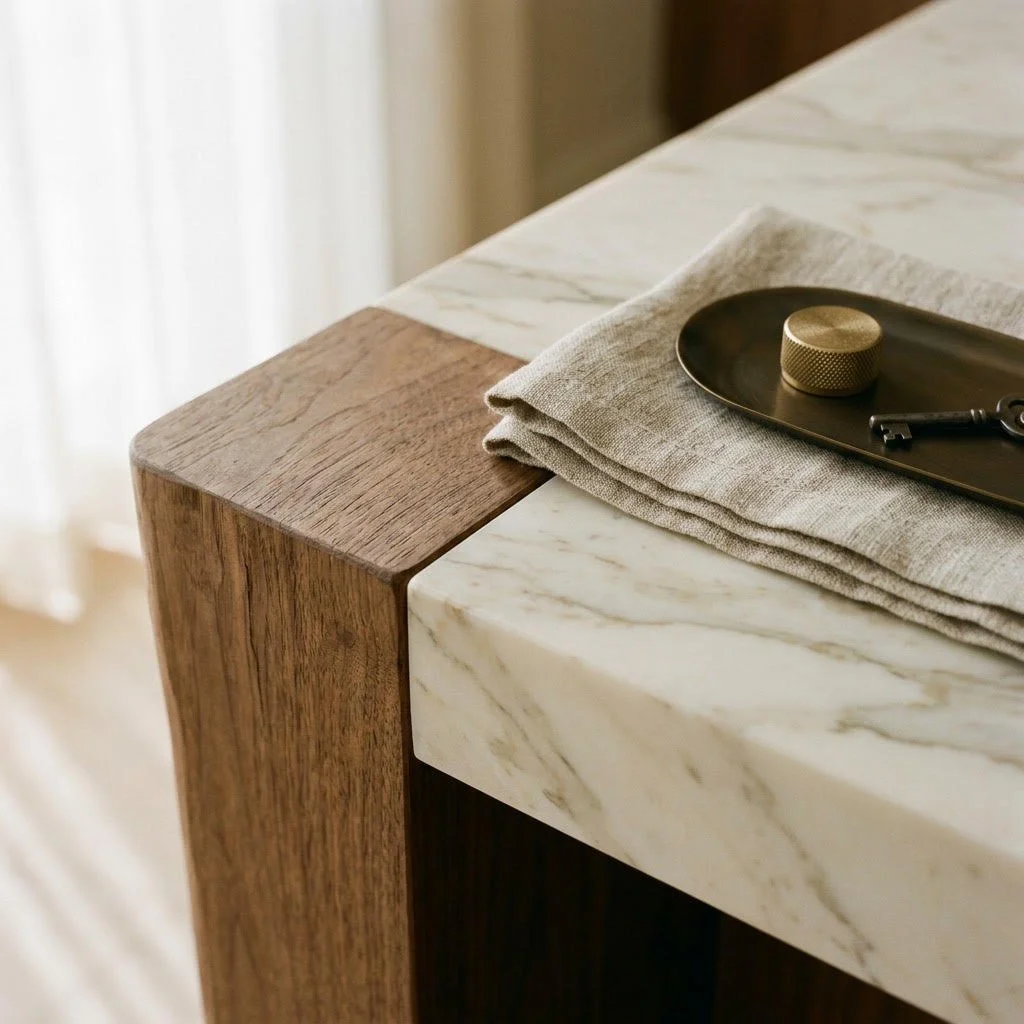
I don’t believe there is a universal list of materials, colours or forms that will always work. Context matters enormously. Natural stone, for example, can feel timeless in one setting and completely ordinary in another. The same applies to colour. A bold tone can remain relevant for decades when it is part of a coherent concept, while a supposedly neutral palette can feel dated very quickly.
I’m particularly drawn to materials that are allowed to age naturally - wood, stone, metal and high-quality textiles, for example. With colour, I often prefer nuanced tones that can interact beautifully with different materials and changing light. Ultimately, longevity comes from the relationship between elements, not from any single material.
9. How can you introduce current trends without having to replace an entire interior?
I prefer to treat trends as accents rather than as the foundation of a space.
A room can take on an entirely different character through textiles, a new light fixture, artwork or a carefully chosen piece of furniture. Colour can also be introduced selectively through a wall, a textile or a small but deliberate contrast.
The important thing is to understand what already has quality and character before deciding what needs to change. Not everything that is older needs to be replaced. In fact, the combination of established pieces with a few contemporary additions can often create a much richer and more personal interior than starting from scratch.
10. Can a space be timeless while still feeling highly individual and full of character?
Absolutely.
I don’t see timelessness and individuality as opposites at all. A timeless interior can have a strong colour, expressive artwork, unusual furniture or a very distinctive material palette. What matters is whether those decisions are part of a coherent whole. Individuality emerges when a space responds to its architecture, its inhabitants and the way it is used, rather than simply following a recognisable style.
Bespoke elements can play an important role because they allow the design to respond to the specific qualities of a space. A room should have a point of view. In fact, that sense of personality is often what allows an interior to remain interesting for many years.
11. What role do personal objects, art, vintage pieces or heirlooms play in keeping an interior interesting over time?
They play a very important role because they bring something into a space that cannot simply be designed or purchased: a sense of history.
A piece of art, a vintage chair or an inherited object can create a fascinating dialogue with contemporary furniture and architecture. These contrasts prevent an interior from feeling too perfect or interchangeable. I find spaces particularly compelling when they feel as though they have evolved over time. That doesn’t mean displaying everything that is personal.
A small number of carefully chosen objects can have much more impact. They add an emotional layer to the interior and that is something that tends to remain relevant far longer than a particular aesthetic trend.
12. Is it perhaps more sustainable to focus less on trends and instead create an interior that evolves with its inhabitants?
Yes. For me, longevity begins with the planning process.
When a space is carefully considered, materials are selected for their quality and furniture is chosen for more than a temporary aesthetic, the result has a much stronger foundation. Sustainability is not simply about owning less. It is also about making thoughtful choices and creating things that can be used, repaired, adapted or passed on over time.
I therefore like to ask whether a decision will still make sense several years from now, not only aesthetically, but also functionally and materially. When it does, you have already created the conditions for a more sustainable and enduring interior.
13. Is there an interior trend you see everywhere at the moment that makes you think: “I’m not sure people will want to see this in a few years”?
I’m always cautious about predicting what will disappear. Trends rarely vanish completely; they tend to evolve, return or acquire a new meaning. Certain shapes or design motifs can become oversaturated simply because we see them so often, but that doesn’t necessarily make them irrelevant forever.
What concerns me more is when something is chosen purely because it is everywhere. That is usually when an interior risks feeling dated very quickly. I think a more useful question is: Would I still choose this if I hadn’t seen it repeatedly over the last six months? If the answer is yes, there is probably something more genuine behind the choice.
14. If you were designing a space today that still needed to work beautifully in 15 years, what three things would be essential?
First, a well-considered spatial structure. Proportion, circulation, light and function form the foundation of an interior that can remain relevant over time.
Second, quality in materials, craftsmanship and furniture. Well-made things can age without losing their value or character. And third, personality. I would never design a space purely around an aesthetic concept. It should tell us something about the people who inhabit it and allow room for change.
A successful interior in 15 years doesn’t necessarily have to look the same as it does today. It needs to have enough strength and flexibility to evolve while retaining its underlying identity.
